News
-
 2026-09-15
What Is The Price Of Sand Drying System? Tong ding Machinery Price Guide
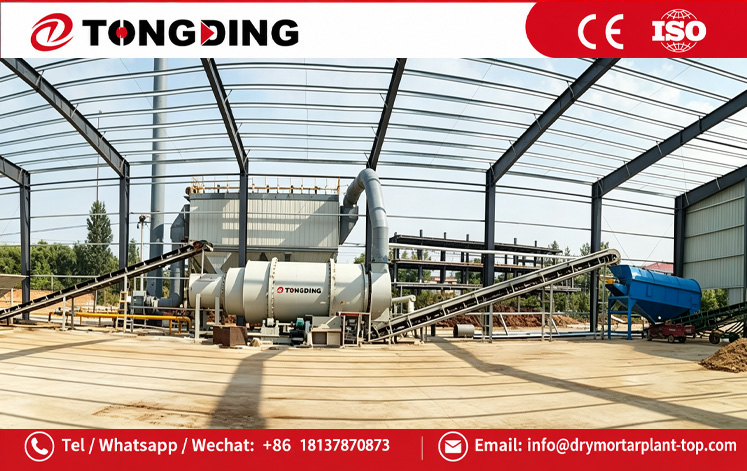
Are you planning to purchase a complete sand drying line, or are you unsure about the pricing? Today, Tongding Machinery will provide a detailed overview of the sand drying system’s components, costs, and key considerations for purchasing. 一.Component Of A Complete Sand Drying System A complete sand drying system comprises six major modules: material feeding, the main drying unit, the heat source system, the dust removal and environmental protection system, the discharge/screening/storage system, and the electrical control system. The standard process flow is as follows: wet sand silo → feeder → feed conveyor → triple-pass dryer → discharge conveyor → vibrating screen → bucket elevator → dry sand silo; exhaust gas is routed through the dust removal system to ensure emissions meet standards. 二.Capacity Of The Sand Dryer The production capacity of the entire drying line is determined by the main dryer unit, with the auxiliary conveying, dust removal, and heat source systems matched accordingly. The dryer capacity chart is provided below. Model Power(KW) Capacity(T/H) Rotary speed (r/min) Installation Angle final Moisture Heat Supply Mode HG1625 4kw 3-8 t/h 9 Aclinic ≤0.5% 1) Firewood 2) Pulverized coal 3) Diesel 4) Natural gas 5) not carbonizedbiomass fuel 6) carbonizedbiomass fuel HG2240...
-
 2026-09-09
Tongding Rotary Drum Sludge Dryer——Sludge Drying Process
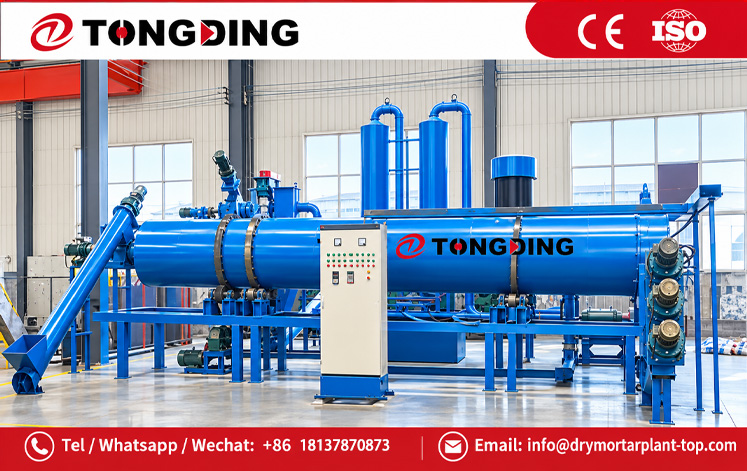
Although the drying process of sludge dryers varies depending on the equipment type, it can generally be divided into several distinct stages. Taking the common rotary drum dryer as an example, its operation can be summarized into the following four main stages. 一.Feeding and Material Guiding Stage of Sludge Dryer Machine Sludge with high moisture content is conveyed into the dryer. In the material guiding zone, the sludge makes initial contact with high-temperature hot air, causing surface moisture to evaporate rapidly; simultaneously, specially designed lifting flights propel the material forward and prevent it from sticking. 二.Primary Drying Stage Of Sludge Dryer This is the core stage of the drying process. Depending on the equipment used, the sludge passes through various functional zones within the drying cylinder. For instance, in the clearing and inclined lifting-flight zones, the repeated action of lifting flights, vanes, and cleaning mechanisms continuously tosses and breaks up the sludge; this ensures thorough heat exchange with the hot air and facilitates the continuous evaporation of internal moisture. Another common method employs a hollow paddle dryer, where heat is applied simultaneously via the paddles and the vessel jacket; as the sludge is agitated and conveyed forward, its heated surface...
-
 2026-09-01
Lignite Dryer: Reliable Lignite Drying Solutions From Tongding Machinery
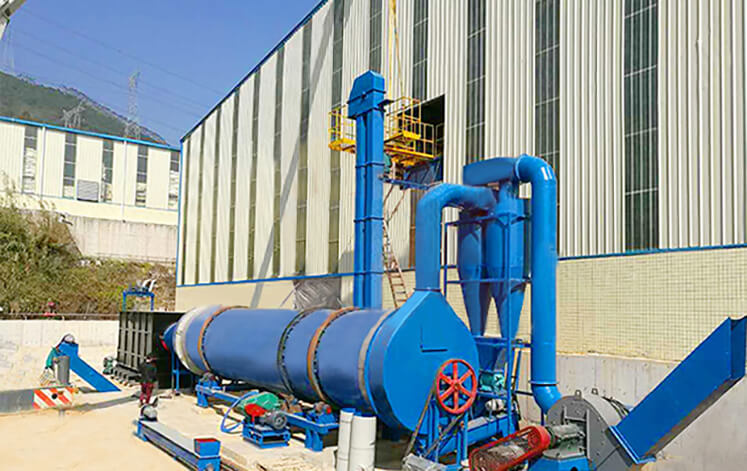
What is Lignite Dryer? A lignite dryer is an industrial device specifically designed to reduce the moisture content of lignite (a young coal type with high moisture content and low calorific value). It typically employs a rotary drum structure, utilizing hot air in direct contact with the lignite. Through processes such as “low-temperature four-stage drying,” the moisture content of lignite can be significantly reduced from 30%-50% to below 13%. After drying, the calorific value of lignite is significantly increased, making it easier to store and transport, thereby enhancing its utilization value as fuel or chemical raw material. Advantages of Lignite Drying equipment The advantages of lignite drying equipment are mainly reflected in four aspects: safety, efficiency, quality improvement, and environmental protection. It employs low-temperature or indirect drying technology, effectively preventing lignite from igniting and exploding due to its high volatile matter content. The equipment achieves high drying efficiency and low heat loss through enhanced heat exchange. After drying, the calorific value of the lignite is significantly increased, and it becomes hydrophobic and non-moisture-resistant, facilitating storage and transportation. Simultaneously, the fully enclosed negative pressure operation effectively controls dust pollution. Applications of lignite drying machine Lignite dryers have a wide...
-
 2026-08-27
Tongding SJ2 automatic dry mortar production line and Tongding S6215 sand dryer Installation successful in Zambia
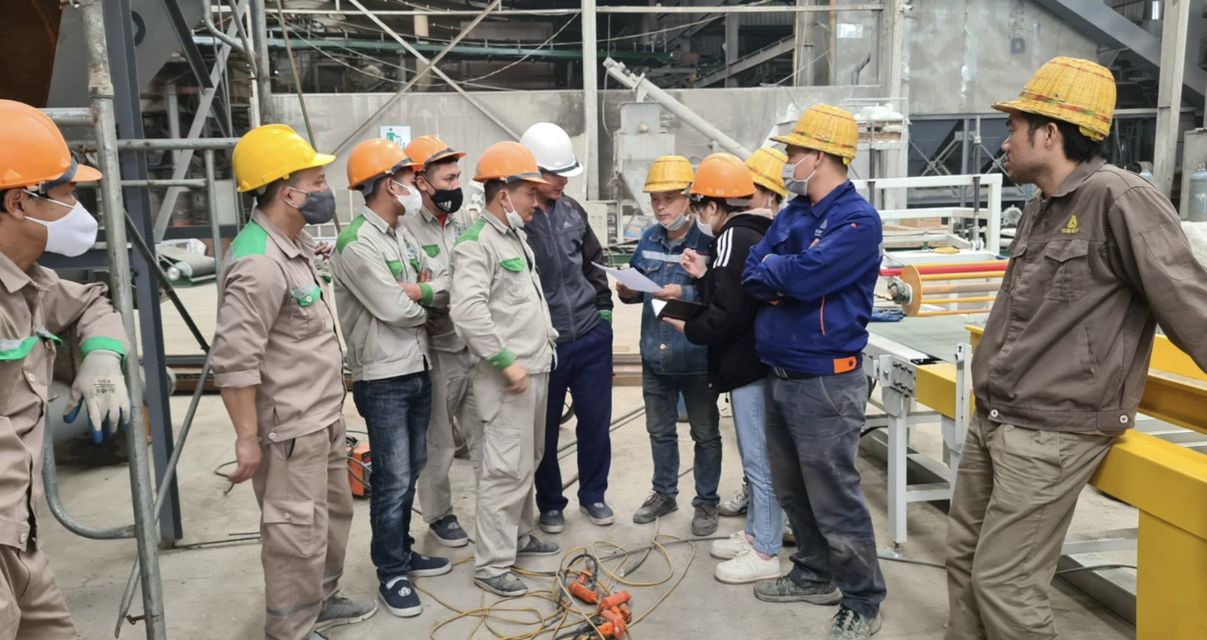
Tongding successfully finished installation and commissioning for the customer’s new plant in Zambia, delivering the complete Tongding SJ2 automatic dry mortar production line together with the supporting Tongding S6215 sand dryer. This integrated system is built for local dry‑mix mortar manufacturing, solving raw sand drying and automatic mortar mixing demands for the African construction market. 一.Project Background: Demand for Complete dry mortar production line and supporting sand dryer in Zambia The Zambian construction market is expanding rapidly, with local builders showing a continuous increase in demand for tile adhesives, masonry mortars, and plastering mortars. The client planned to build a new factory but faced two major challenges: a lack of fully automated dry mortar production lines and drying equipment capable of handling high-moisture river sand—wet sand directly affects mixing uniformity, finished product quality, and equipment stability. After comparing several suppliers, the client ultimately chose Tongding’s one-stop turnkey solution, which includes a dry mortar production line and a matching sand drying system. 二.Custom Solution: Match SJ2 dry mortar plant with S6215 sand dryer Based on the client’s target production capacity, raw sand characteristics, and plant conditions, our engineering team tailored a supporting system. The SJ2 fully automatic dry-mix mortar production line...
-
 2026-08-26
Why three-pass rotary dryers have surpassed single-drum dryers to become the ideal choice for sand drying
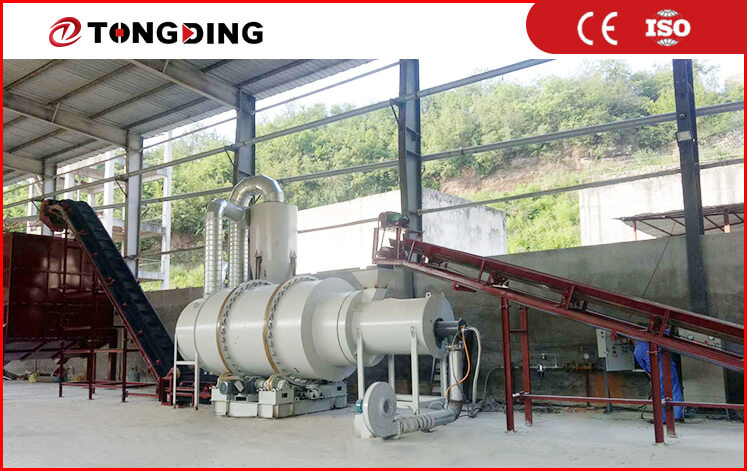
Three‑pass rotary dryers are now widely preferred over traditional single‑drum dryers for industrial sand drying projects. Thanks to its nested three‑drum structure, this dryer delivers higher thermal efficiency, lower fuel costs and more uniform moisture output. It also cuts installation footprint greatly while maintaining stable high throughput. Below we break down the key practical reasons why more sand processing plants choose three‑pass rotary dryers for daily production. Difference between three-pass rotary dryers and single-drum dryers The core difference between a three-pass rotary dryer (three-pass dryer) and a single-drum dryer lies in their internal structure and thermal efficiency. A three-pass dryer consists of three nested cylinders (inner, middle, and outer), allowing for a long material travel distance within the cylinder, resulting in high thermal energy utilization and a small footprint. It is particularly suitable for large-scale continuous production of fine-particle materials such as sand. In contrast, a single-drum dryer has a simpler structure with only one cylinder. While it has lower investment costs and is easier to maintain, it suffers from greater heat loss, higher energy consumption, and a larger overall size. Advantages of three-pass rotary dryers compared to single-drum dryers The three-channel rotary dryer (three-pass dryer) offers significant advantages over...
-
 2026-08-14
Rotary Sand Dryer——Tongding Professional Manufacturer
A rotary sand dryer is the most widely used industrial drying equipment for processing wet sand materials in construction, mining, dry mortar, and mineral processing industries. As a professional sand drying machine, it efficiently removes excess moisture from river sand, silica sand, sea sand, and mineral sand, delivering stable and dry finished products. Compared with ordinary sand dryers, our industrial sand dryer machine features high thermal efficiency, low energy consumption, and stable operation, making it the top choice for global industrial production lines. Browse our sand drying equipment series to view complete machine specifications and application cases. Key Advantages of Industrial Rotary Sand Dryer The primary advantages of the Tongding industrial rotary sand and gravel dryer lie in its exceptionally high thermal efficiency and outstanding energy-saving performance. By utilizing a three-drum (nested) structure, heat is reused across the three concentric cylinders, significantly extending the heat exchange duration; this boosts thermal efficiency by 40%–80% and reduces energy consumption by 30%–50% compared to conventional equipment. It boasts high processing capacity—with a single-unit hourly output ranging from 3 to 110 tons—and efficiently handles materials with high moisture content. Additionally, the equipment features excellent sealing to effectively minimize dust emissions, ensuring compliance with environmental...